Showing posts with label author interview. Show all posts

Sunday, May 15, 2011

WHAT COMES AFTER Author Interview!

Sorry the radio silence, y'all. I got a job here at home and that's literally eaten up all of my time. That, and Veronica Mars on Netflix and baking cookies and generally not doing anything productive.

Anyways, today I have a very awesome interview with the author of WHAT COMES AFTER, Steve Watkins! Not only is he awesome, but he also attended FSU, just like I do.


After her veterinarian dad dies, sixteen-year-old Iris Wight must leave her beloved Maine to live on a North Carolina farm with her hardbitten aunt and a cousin she barely knows. Iris, a vegetarian and animal lover, immediately clashes with Aunt Sue, who mistreats the livestock, spends Iris’s small inheritance, and thinks nothing of striking Iris for the smallest offense. Things come to a head when Iris sets two young goats free to save them from slaughter, and an enraged Aunt Sue orders her brutish son, Book, to beat Iris senseless - a horrific act that lands Book and his mother in jail. Sent to live with an offbeat foster family and their "dooking" ferrets, Iris must find a way to take care of the animals back at the farm, even if it means confronting Aunt Sue. Powerful and deeply moving, this compelling novel affirms the redemptive power of animals and the resilience of the human spirit.


Obviously WHAT COMES AFTER deals a lot with animal abuse - are you a big advocate of animal rights?


Well, yes and no. I don’t believe, as some animal rightists do, that animals are people too. That is, I don’t believe they have the same level of sentience, of consciousness, of self-awareness as we do. That said, I believe we humans have a collective responsibility to treat animals—to treat everything on Earth—responsibly and ethically and in a kind and loving manner. We’re the stewards here. We don’t own it. We’re just responsible for taking care of the place, and everything that lives here.

When did you first start writing?

Probably about the time I read my first book. But the first thing I remember actually writing was a story called “The Glisening Sword” (and yes, I did leave off the silent “t” in glistening throughout the book, which I not only wrote, but illustrated as well). I was probably in second grade. It’s about a boy named Tommy who brings his dog to this place called Death Drop Off (which I misspelled as “Death Drop Of,” also throughout) to investigate a mysterious, malevolent sword that has been terrorizing the neighborhood. While they’re camping next to Death Drop Of (or Off), the sword, which has tentacles on the handle, shimmies up the side of the thousand foot hole, comes out, and impales the poor dog, killing it instantly. The sword then knocks Tommy knocked down into Death Drop Off (or Of). Fortunately it’s a soft, mucky bottom and he survives the fall. The place turns out to be a diamond mine, which oddly, also has cabbage-size rubies, one of which Tommy grabs and bashes the Glisening Sword into submission. He escapes. The end.

How did you come up with the idea for WHAT COMES AFTER?


From an article I read in our local newspaper. The article at the beginning of WHAT COMES AFTER is actually a lightly fictionalized version of the actual article from the newspaper. I was recently contacted by the detective who investigated the case in real life, asking if it was the same case he had worked on. He said he was proud of his work on that case because he was able to solve what happened, and help out someone who desperately needed it. I intentionally didn’t find out what happened to the girl in the actual case, though my friends in social services and the organization CASA—Court Appointed Special Advocates—did know her and her circumstances. I’m sure she’s aged out of the foster care system by now. The detective thought she might be back in New England. I’ve worked on a number of abuse and neglect cases as a child advocate and investigator, and know that there’s always so much more to anyone’s story than the minimal explanation you often see in the paper about the victim, and so I wanted to imagine this girl’s story, and so I did.

You also have a book of short stories published. Which would you say you find easier, short stories or novels?

Short stories are much more difficult in some ways. It’s such a compressed form, you have to develop your characters, your situation, your conflict, your plot, and find your thematic resonance all in such a short amount of time and space. I’ll spend easily ten times the amount of time writing a short story as I will a novel chapter of comparable length. Very different challenges, those two genres. I love both, but probably haven’t written a new short story in five years. (Though I have written three novels in that time—one a work in progress, my next book with Candlewick Press, called JUVIE.)

Who's your favorite author?


I’m going to quote myself here—from another blog post I did for someone else, who asked if I ever had a fanboy moment. I said yeah, all the time, and then I listed a bunch of writers and works, all of whom and which I’d have to include in my list of favorites, because nobody, and I mean nobody, has just one favorite author: Toni Morrison’s The Bluest Eye, Harper Lee’s To Kill a Mockingbird, Mark Twain’s The Adventures of Huckleberry Finn, Dante’s Inferno, Joseph Heller’s Catch 22, Tracy Kidder’s Mountains Beyond Mountains, E.M. Forster’s A Passage to India, Joseph Conrad’s Heart of Darkness, Tim O’Brien’s The Things They Carried, Mary Shelley’s Frankenstein: The Modern Prometheus, Tobias Woolf’s This Boy’s Life, Louis Sacher’s Milkweed, Anne Tyler’s Dinner at the Homesick Restaurant, Jean Merrill’s The Pushcart War, Gabriel Garcia Marquez’s Chronicle of a Death Foretold, James Joyce’s Dubliners and especially “The Dead,” Peter Matthiessen’s At Play in the Fields of the Lord, Thom Jones’ “The Pugilist at Rest,” William Faulkner’s The Sound and the Fury, Ecclesiastes, Margaret Wise Brown and Clement Hurd’s Runaway Bunny, so many others and so many works that have left me stunned into stillness and silence and awe.

What are your biggest writing inspirations?

I don’t know if you could call it an inspiration or not, but when I was little I used to get scared a lot at night and I would beg my older brother to let me crawl into bed with him. He was on the bottom bunk; I was on the top. He had two conditions for letting me in: one, I had to bring my own pillow and lie with my head at his feet, and two, I had to tell him stories. So I would be lying awake deep into the night, spinning these wild stories, caught up in my own narratives, long after he started snoring. I wrote a fictionalized version of that in a scene in my YA novel DOWN SAND MOUNTAIN. I don’t think my brain has ever stopped making up stories since then, and now it’s not so much a case of needing inspiration to write as it is that I write because I can’t not write.

Why do you write for young adults?

I didn’t mean to at first, but my agent thought DOWN SAND MOUNTAIN would make a good YA novel, and Candlewick agreed. They were very generous with their offer to buy DSM, which I hadn’t consciously written for a younger audience, and they were so wonderful to work with, especially my editor, Kaylan Addair, that I decided I wanted to write another for them. That next book was WHAT COMES AFTER, and now I’m working on a third for Candlewick, JUVIE, which I mentioned above. What truly has drawn me back to writing YA novels is that it’s such a hopeful genre. Younger readers—and that includes many readers all the way up to retirement age and beyond—want challenging and compelling characters and stories and themes. They don’t want to be patronized—they understand that life can be hard, can be VERY hard, and painful at times. But they haven’t given up hope—for finding meaning even in the hardest of circumstances, for truth, and for grace--and they want a literature that reflects that.

Awesome, very insightful answers, Steve! I can't wait to get my hands on a copy of WHAT COMES AFTER, which was published April 12th!

Wednesday, April 6, 2011

Enclave Author Interview!


"New York City has been decimated by war and plague, and most of civilization has migrated to underground enclaves, where life expectancy is no more than the early 20's. When Deuce turns 15, she takes on her role as a Huntress, and is paired with Fade, a teenage Hunter who lived Topside as a young boy. When she and Fade discover that the neighboring enclave has been decimated by the tunnel monsters—or Freaks—who seem to be growing more organized, the elders refuse to listen to warnings. And when Deuce and Fade are exiled from the enclave, the girl born in darkness must survive in daylight, in the ruins of a city whose population has dwindled to a few dangerous gangs. As the two are guided by Fade’s long-ago memories, they face dangers, and feelings, unlike any they’ve ever known."


1. Tell us how you came up with the idea for Enclave.
Recently, in an interview, I was asked why I chose a post-apocalyptic world for my YA debut. The answer is actually two-fold. First, I wasn't sure I had the voice to write a beautiful contemporary in the vein of Jennifer Echols, but I wanted, quite desperately, to write a YA. So I decided if I couldn't do a compelling young protagonist in this world, I'd invent one.

I'm a child of the eighties, and we saw filmstrips about what would happen if the bomb dropped. Sometimes we had nuclear drills in addition to fire and tornado. When I think about twenty small children huddled under their desks in case the Russians let one fly, well, it's rather absurd, isn't it? But that sort of fear shaped my psyche, so that's definitely a contributing factor. The other reason? Well, I'll just quote the interview I did with Karen from For What It's Worth: "I think it's because they're uplifting. No, seriously. You take a world in utter disarray. Things are incredibly bleak. Then a hero arises, someone who has the desire and drive to succeed, no matter what. And this person changes his or her world in some fashion. How can that message not be incredibly valuable to young adults? I think it lends hope that there can always be brightness, no matter how dark it seems."

For me, that's the absolute crux of the matter. People need to believe they can make a difference--that one person standing strong can turn the tide. It's easier to demonstrate that in the Razorland world, but that example of internal fortitude will serve readers (of all ages) well.


2. When did you first start writing?
When I was eight, I wrote a story for a school writing competition called THE MYSTERY OF THE GOLDEN DOUBLOON. This seminal, self-illustrated work was about two best friends who went to Florida on vacation and busted an illegal treasure hunting ring. I won the contest. I went to the state finals and met Shel Silverstein, who read to a bunch of us from WHERE THE SIDEWALK ENDS. In that moment, sitting on my square of carpet, I thought, they pay him for his words. this is what I want to do. Later that same year, my teacher told me writing wasn't a real job and I should pick something else. As it turns out, I am stubborn beyond the point of common sense, as I never did choose another career.


3. What are your favorite YA dystopian reads?
I don't read in the genre I'm writing, so the only YA that even comes close to that description that I've read is THE KNIFE OF NEVER LETTING GO. Loved that one. My favorite dystopian novels are LORD OF THE FLIES, A CANTICLE FOR LEIBOWITZ and THE HANDMAID'S TALE.


4. I know that you usually write for adults - what made you decide to write a book with a teen protagonist?
The age of the protagonist fit the world.


5. Who are your biggest writing influences?
I love many authors' work, but consciously, nobody, because I strive to write my own books and not emulate anyone else.

Friday, February 25, 2011

Like Mandarin Author Interview!

I'm so excited because I've had the pleasure of interviewing Kirsten Hubbard, author of the upcoming novel LIKE MANDARIN!

Tell us about the process of getting Like Mandarin published.

The history of Like Mandarin is a long one, but I'll keep it brief! It actually began as a short story for the final project of a fiction class during my freshman year at UCSD. In the years after, I couldn't get the characters out of my head. I expanded the story into a screenplay for a later class, then into a novel when I was 22. The Like Mandarin you'll read today is a second version I overhauled at age 25 -- infinite times better, though the heart of it is the same.

When I queried this version of Like Mandarin, my agent, Michelle Andelman, requested a full within half an hour and offered representation after the weekend. Following a few weeks of revision, it went to auction and sold to Delacorte in a two-book deal. It was a crazy whirlwind! Or a wildwind, I should say.

Who is your favorite character in Like Mandarin?

I adore Taffeta (Grace's little sister), empathize with Momma, and totally heart Davey Miller – a side character readers tend to fall for. What I feel for Grace is a very real love, part sister and part daughter and part what you feel for younger versions of yourself, even though I wasn't much like Grace. But I'd have to say my favorite character is Mandarin Ramey. I knew my readers wouldn't believe Grace's fascination with her if I weren't fascinated with her myself, and that feeling has never left me. I wonder about her often.

I love the cover! What was your reaction when you first saw it?

Thank you! I first saw it hanging on a bookshelf in my editor's office, during an NYC trip where I met both my agent and editor for the first time. It was completely unexpected – both being confronted with it, and the cover itself. I'd expected Mandarin, with her black hair in the wind, or a panorama of badlands. But my cover is so much better – almost movie poster iconic, with the white space, and intensity, and simplicity. I am a very lucky author.

Do you think that travelling so much has helped you as a writer?

Like nothing else. (Well, other than reading!)

Here's why. Writing is a solitary pursuit that takes a lot of repetition, and a lot of alone time. It's introverted by nature, and it's easy to fall into a stay-at-home rut, where nearly all of what you "take in" is media – movies, books, television, the internet. While all that's rich and varied and necessary, none of it beats real-life experiences as idea fodder for novels. And nothing creates experience like venturing outside your comfort zone – especially somewhere stunning, culturally and visually. Travel puts you in situations you could never imagine. It forces interaction with all kinds of people, and inspires in completely unforeseen ways. I'm also obsessed with compelling settings, and though authors are master imaginers, visiting a place always results in more vibrant writing. As a result of my trips (both deliberate for research purposes and accidental), many of my favorite scenes were written in evocative places.

For example, there's a scene in Like Mandarin where Grace is walking through the Wyoming badlands. In part:

"I followed one of the water-trails tapering into the hills. The only sounds were the crunching of my shoes, the occasional low-pitched buzz of an insect, and a gentle wind—not the slightest bit wild—ruffling the dry grasses and shrubs. As I stopped at the top of a crest, gazing out at the gradients of blue hills, brown hills, gray hills, I thought: Mandarin would have loved it out here."

I took notes for that scene on a walk through the actual Wyoming badlands. Now, when I reread it, I'm there.

What is your favorite YA book of 2010?

Can't name just one! Recently, I loved The Sky Is Everywhere by Jandy Nelson, Anna and the French Kiss by Stephanie Perkins and Before I Fall by Lauren Oliver. I think I read Finnikin of the Rock in 2009, but it's a 2010 book – Melina Marchetta is a genius.

Thanks so much, Kirsten! LIKE MANDARIN comes out March 8th. :)

Saturday, November 6, 2010

Author Guest Post: Denise Jaden

I'm super excited because today Denise Jaden, author of Losing Faith, has agreed to do a guest post for her blog tour!

What was the process of getting Losing Faith published? 
I’ve been writing seriously for about seven years. Although I have had no formal training, I have devoured books on writing craft and attended workshops and conferences since the day I became interested in stories.
I queried two other books unsuccessfully prior to the writing of Losing Faith. In November 2007 I made my first attempt at NaNoWriMo (writing a novel in a month) and had a first (really crappy) draft of Losing Faith in 21 days. I revised and revised and then revised some more, getting feedback from all of my many critique partners along the way.
I began querying in July, 2008 (paused querying to revise after getting some great feedback at a conference in October). I queried again in November and had offers of representations later that month. Even though I had a few different offers (which I’m still blown away by – it doesn’t seem like it could be real after enduring so much rejection!), that first offer is still saved on my answering machine. There’s nothing better than the first moment an industry professional validates all your blood, sweat, and tears.
My new agent, Michelle Humphrey, did a line edit for me over Christmas and we sent LOSING FAITH out on submission in mid-January. We had an offer by early March. The offering editor was from Simon Pulse/Simon & Schuster, and she was one of the editors I had met with in the conference back in October. We had a phone conversation, with my agent listening in, so she could explain her vision for changes in the manuscript. When I agreed, she made an offer, and the rest is history!
I sold in March of 2009 and my book hit the shelves in September, 2010, so about a year and a half from sale to publication. It felt like forever at first, waiting for revision letters, cover art, back text copy. But then the last six months flew by. I’m still pinching myself that this is actually happening and my book is really out in the wild. Every time I walk into a bookstore and see it on the shelves, my heart stops for a few seconds.
Thanks so much, Denise!

Monday, August 23, 2010

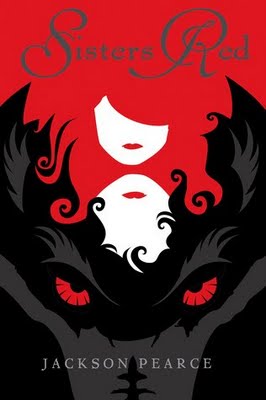
Author Interview: Jackson Pearce

Right after I read Sisters Red, I asked Jackson if she'd like to do an interview. Of course, this woman is amazing and busy and what-have-you, so I've just now gotten around to posing it! Blame my first day of college for it!

If you guys are unaware, Jackson is the author of two YA books: As You Wish and Sisters Red, both of which are amazing and both of which I own! I'd definitely recommend you read them. 

Anyway, here's my review of Sisters Red, which I was totally in love with. I liked how it stuck to the roots of scary, not-sexy werewolves, even if I am a fan of sexy, Native American werewolves. (Ahem, I did not just admit that!)

What was the first novel you ever wrote called and what was it about?
My first book was called THE KEYBEARER, and it was about a girl who finds out the attic in her deceased mother's house leads to another world when she uses a set of old keys in the door. It was a fun book, but a little too overdone to be publishable (I now realize).

What do you think is the hardest part of being a writer?
The hardest part of being a writer is juggling the writing side with the author side. As a writer, my only job is to write, edit and revise. But as an author, I have to answer emails, do interviews, live shows, talk to publishers-- I love BOTH the writer and author side of the profession, but sometimes it's tough to make time for both!

Who is your favorite character in Sisters Red?
I truly don't have a favorite character-- I love both Scarlett and Rosie. I do find myself a little more empathetic to Scarlett, perhaps since I'm an older sister too. When people say she's too obsessed with hunting, or that she needs her own love story, I get really defensive!

A lot of authors have been romanticizing werewolves in recent novels (Twilight Saga, The Dark Divine, Shiver). However, Sisters Red definitely doesn't do this. Were you trying to contradict the current trend? (I loved the idea of returning back to the scary roots of werewolves. They seem a little too... whiny nowadays.)
I wasn't really trying to contradict the trend, I was just writing a book I loved! It just happened to be the opposite of what's going on with werewolves nowadays. I did, however, want to make sure that if my wolves were monsters, they were REALLY going to be monsters. The eat-your-face kind :)

And, a random bonus question: Are you a dog or a cat person?
I've got one of each! I love both dogs and cats.